Showing posts with label fireworks. Show all posts

Wednesday, 3 December 2014

Why Do My Fireworks Pictures Look So Crappy?

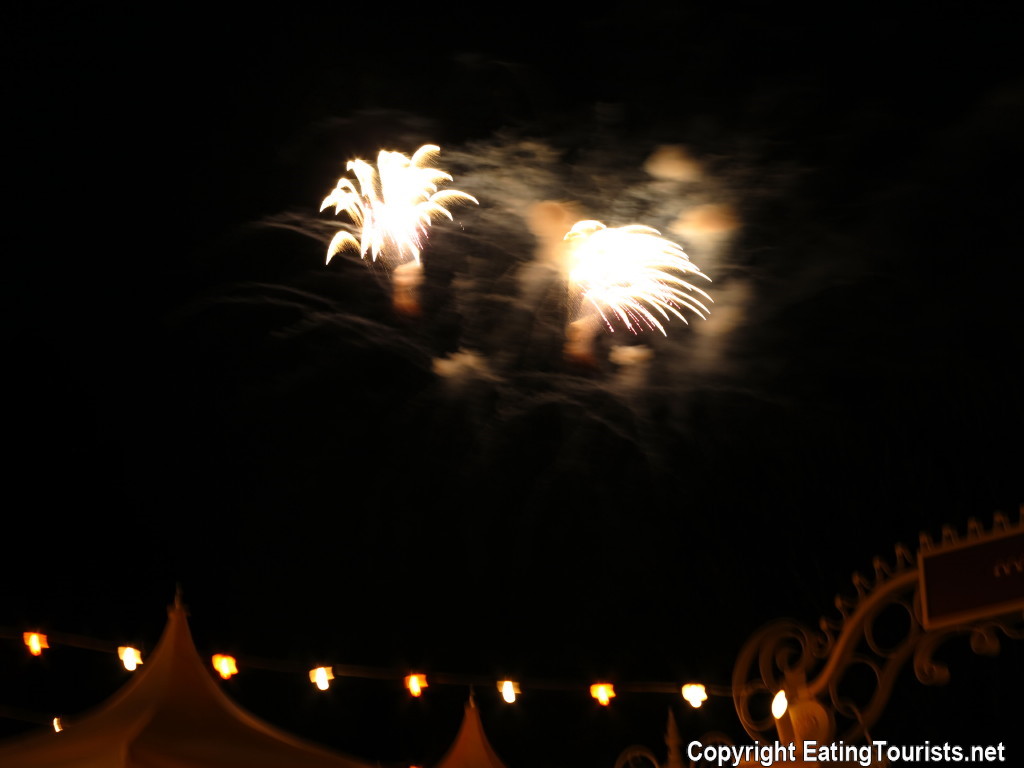
If you've ever been at a major fireworks display, perhaps on the 4th of July, or any night at Disneyland, you've probably been surrounded by hopeful tourists snapping away with their cameras. Many might even have the flash turned on. (It's dark right? So I need the flash...right? Ummm...wrong). These people are all doomed to fail in their efforts to capture pictures of fireworks that will do them any kind of justice, and they'll usually end up with something that looks like this:

Not What You Were Hoping For
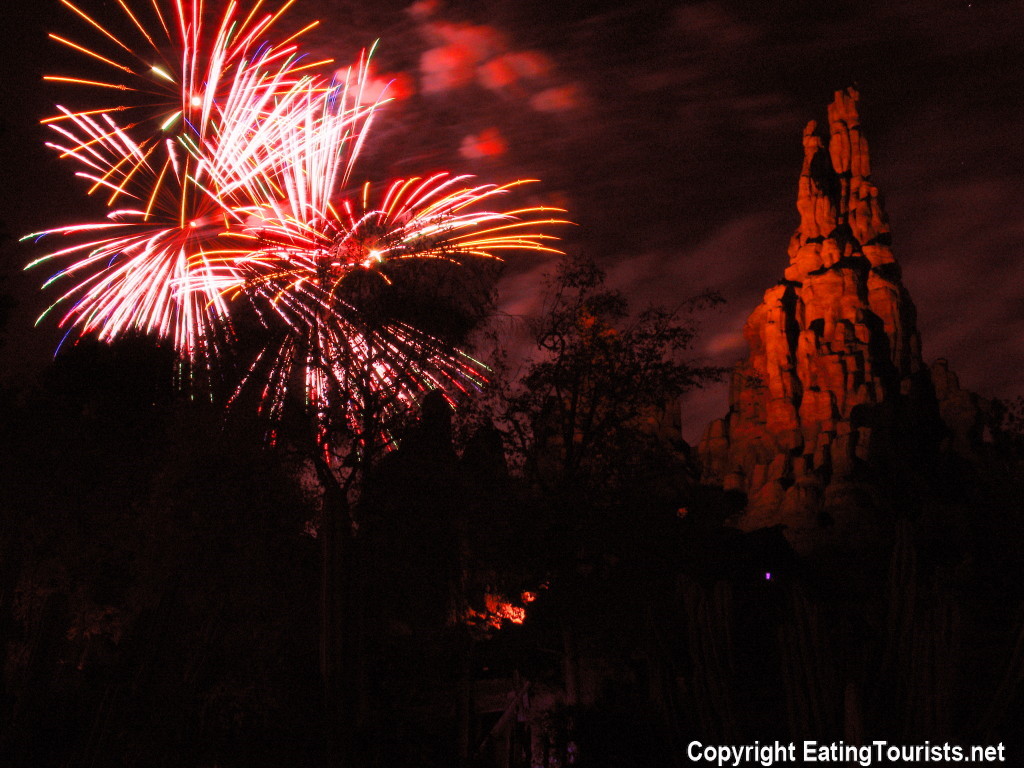
Part of this is a failure to understand just why fireworks look so great in person, but so lousy in point-and-shoot vacation snapshots. The rest is caused by a lack of attention to the "Two T's" of fireworks photography: Time and Tripod. With just a little attention to the details, you can expect to get something more like this:

That's more like it!
So what's the trick? At any given moment during a display, there may be several different fireworks exploding overhead, and those may also be in different phases of their explosion, some just started, some fully formed, and others fading out at the end of their few seconds of sparkling life.The important words here to the budding fireworks photographer are "few seconds".

A typical modern digital camera on its "automatic setting" might have a shutter speed of around 1/8th of a second when trying to shoot fireworks photos. That means that only what is happening during that 1/8th of a second is actually recorded in the photograph. So what you end up with is a disappointing few points of light, or a fuzzy white smudge, and never the sky filled with color that you seem be seeing as you watch. However, if the camera is set to keep the shutter open for 5, or 15, or even 60 seconds, then everything that happens during that time is recorded in the photo. A great deal happens in 15 seconds during a well timed professional fireworks display, and not surprisingly, a photo that records all of it in a single image can be pretty impressive. (The photo above was taken using a 6 second exposure).

As we wrote in an earlier post, it's in a situation like this that knowing some of the basic principles of photography really helps out. While it's difficult to give any specific instructions because of the huge variety of cameras out there, there are certainly a few general guidelines that will apply to most. If your camera has a "manual" setting, you'll want to use that, as it will give you complete control over the features that will ensure a great series of fireworks photos. If not, many cameras have a "fireworks" setting that will automatically set a slow shutter speed of several seconds, which is not a perfect solution but better than nothing.

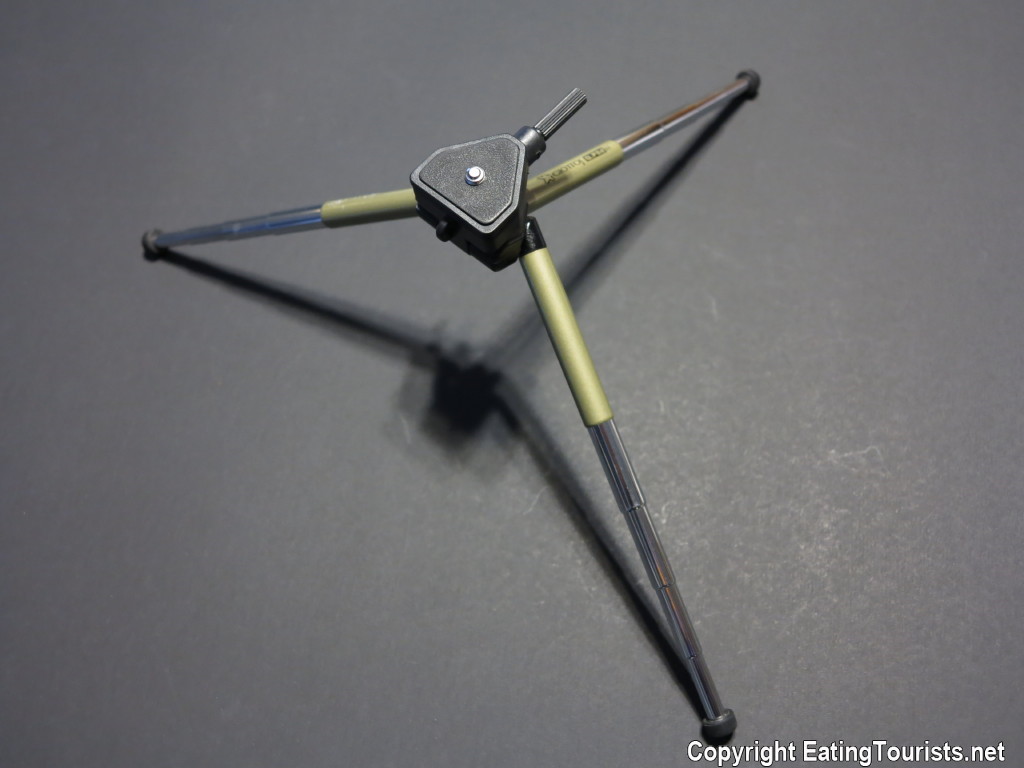
Since we need to keep the shutter open for many seconds, we're going to need a tripod, either a real one or a makeshift tripod. (Sorry, there's just no getting around it). It's simply impossible to hand-hold the camera steadily enough for any shutter speed longer than about 1/4th of a second. The good news is that there are many practical options to solve this problem. There are traditional tripods that are extremely small and light, some even small enough to fit inside a backpack with ease.

Only 15 Inches Long & 24 Ounces In Weight
But these will still open up to almost the same size as a full-on "pro" tripod:


But perhaps more importantly, there is a range of tiny travel tripods that can be pressed into service by placing them on the ground, or on top of a nearby object like a trash bin or a fence post, and some that even have bendy, gripper legs, that can be wrapped around a handy pole or traffic sign. Vicky and I carry two of the little ones whenever we travel. (My favorite is the tiny, light, and very sturdy Q-Pod seen below on the right). In a pinch, the camera can simply be propped up on any acceptable surface and rested on something like a folded up jacket to steady and support it. Anything will do, as long as the camera doesn't move while the shutter is open to take a photo.
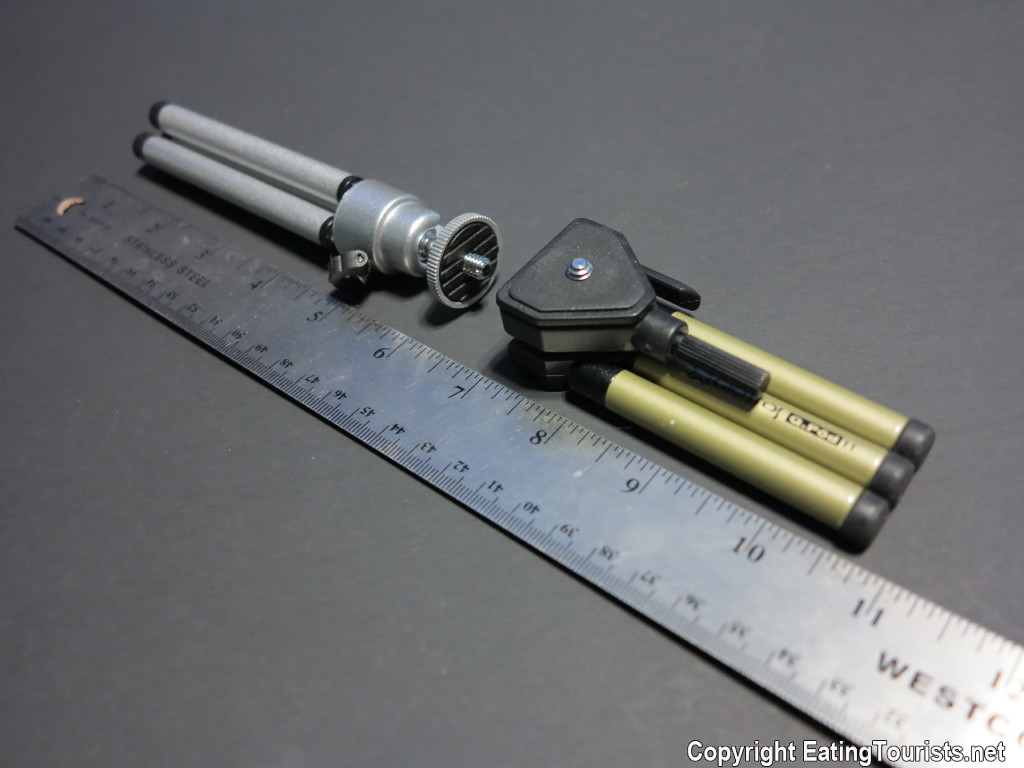
Tiny Travel Tripods (folded)
Open Q-Pod - Gives BIG performance
OK, the hard part is over. Now all we have to do is fine tune the amount of light that gets into the camera during the exposure. There are several ways to do this. With a long exposure time of this sort, we need to keep the ISO setting low. An ISO of 100 or 200 will do fine in most cases. (All cameras will allow you to control this). It's also wise to set your aperture as small as possible as well. (You might need a manual setting for this one). Both these things help to prevent your photo from being overexposed due to the very slow shutter speeds. An overexposed fireworks photo will rob the picture of its color, and everything might appear white. Most important by far though is setting the length of the time for the shutter to stay open. This depends a great deal on how "vigorous" the display is. A slow display may need 60 seconds, while a very rapid fire one may need only 3 or 4. The 4th Of July photo (below) needed a 60 second exposure because the firing rate of the show was very slow paced, while the faster paced Disneyland display (2nd photo below) took only 4 seconds to capture).

Slow Show! What you see recorded in this photo took 60 seconds to happen
Fast Show! This photo took only 4 seconds to capture.
This is where digital photography really pays off, since you can see the results of each attempt instantly, and then adjust the settings before the next one.

Lastly, we have to be sure not to move the camera at all when we release the shutter. This means (as with any tripod photography) that we can't actually push the shutter release button manually like we usually do. We'll either need to have a wireless shutter release, or simply use the timer that's already built into most cameras. The timer option is the easiest and least expensive, and all you'll need to do is choose the "2 second" option so that the shutter releases 2 seconds AFTER you push the button. This prevents the inevitable jiggle caused by touching the camera from being recorded as fuzziness on the final image.

Now that you're armed with the basics, you can prepare for your next night of fireworks and come home with pictures that do the show justice. Just take a little time to learn the basic controls on your camera, grab your tripod, and have fun!

Fox & Vicky

Sunday, 3 August 2014

Here We Go!

Vicky and I just can’t decide how to get our blog rolling. At first we thought that it’s hard to go wrong with humor, so we’d tell the funny story about the time I was detained by security at a Las Vegas casino.

If they say no videotaping, they mean NO videotaping!
But that might make our readers think that the blog would only be about funny anecdotes. Next we thought we could start off with a travel tip, like how you can rescue a day at the beach by fixing a blown-out flip-flop with one of those little plastic tabs that keep a bread bag closed.

We'll tell you how to do this later...
But we didn’t want people to think that our blog was just about travel tips. Then we figured that since everybody loves to eat, we’d tell you about an amazing hole-in-the-wall we found in Montana where people line up out the door for a chance to eat the best barbecue pork I’ve ever had.

BBQ and Beer
But we want this to be more than just a bunch of restaurant reviews. Photography…that’s it! We’ll start with a tip on how to get the most from your camera when you want to capture those amazing fireworks on the Fourth of July.

4th of July from a mountaintop
No…people might think it’s just a blog for camera buffs. Maybe we should start with something about technology. Plenty of readers would love to hear about solving that annoying problem with weak Wi-Fi signals in hotel rooms.

Travel Booster - Wi-Fi's best friend
Wait, I’ve got it…we’ll start with a packing tip. We’ve rescued many a travel day by having some little item like a single use tube of super-glue that can solve a big problem in no time.

It's a super problem solver
No, that’s too specific. How about a photo trip report? Our Alaska pictures would set the tone nicely…

Johns Hopkins Glacier - Glacier Bay, Alaska
…or maybe the Fiji shots would be better.

Matangi Island Sunset, Fiji
We just can’t decide. Maybe we’ll go out for a cold glass of local craft beer and think about it. Now there’s a good first post…we’ll review the micro-brews we tried on our last trip.

Sweet, life-giving, beer
Now we’re getting somewhere. Hey, wait just a minute here. It looks like we’ve already written our first post!

We hope you’ll come along with us for what we promise will be an interesting, funny, and informative look at traveling, eating, and everything that goes with it. We’ll fill you in on the details of the things we’ve only touched on here, and who knows what else? It’s a big world, so we’d better get started…we’ve got plenty to share.

Fox & Vicky