Sunday, 18 January 2015

How I Got The Best Travel Computer EVER & Found True Happiness

As I mentioned in an earlier post, I have a very specific set of needs for a computer when I travel, and they're best served by a small, proper PC, that I can use in the hotel room for about 30 minutes per day. Years ago I hauled around a full sized laptop and I hated it, so I was thrilled to hear about the pint-sized "netbooks" (miniature laptops with limited features that were introduced in about 2007) and I finally got my first one in 2009.

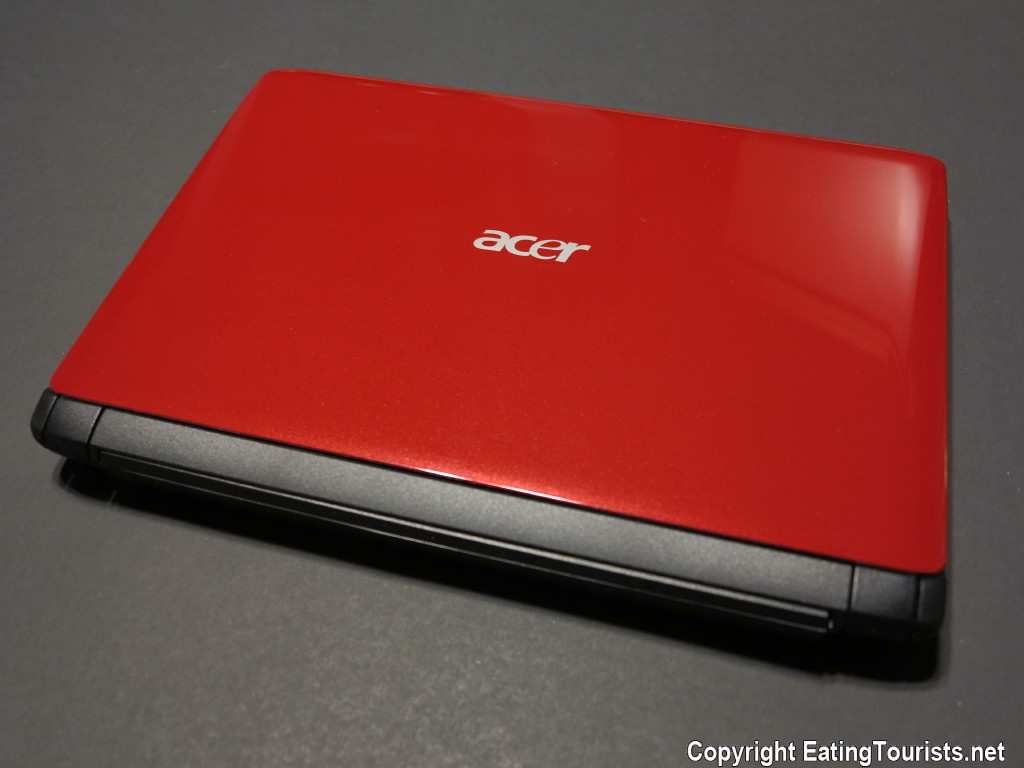
My 10.1" Acer Netbook
I bought an ACER netbook that perfectly suited my needs. Though slower than my laptop, it offered the right features, ran my beloved Windows XP operating system (OS), and was insanely small and light compared to my laptop. It had a beautiful screen, a very small travel charger, a nice keyboard, 3 USB ports, and separate microphone and headphone jacks. Oh...and it was red...which was cool. Sigh...finally, my perfect travel computer.
Remember when mobile devices had keyboards?
Of course it lasted all of three months before it died. (Yeah, I know what you're thinking. "Acer" is Korean for "junk cobbled together from 3rd party suppliers"). Undaunted, I replaced it, but with an Asus brand netbook that was not nearly as nice, but that had the benefit of actually working (for six years so far, and it's still going strong). The Asus also ran Windows XP, and that was what eventually became a problem...

I was horrified when Microsoft yanked all support for XP and I really tried to tough it out despite the dearth of security updates, but eventually my computer started acting weirder than I cared for and I had to face facts. I was thus ultimately forced to deal with replacing all my computers, and this gave me the perfect opportunity to attempt to resurrect my dream travel computer: the long dead Acer.

Now before we get into this, I can guess what you want to ask: Why didn't I just go out and buy a modern miniature laptop, and be done with it? Why go through all the incredible hassle and expense to resurrect a dead antique netbook?

Well for one thing, I really hate to lose, and the dead but otherwise perfect Acer netbook had been galling me for five years...and oh yeah... also because of happiness. Happiness you ask? What does that have to do with smashing your head against a wall and spending 200 bucks to bring a dead vintage netbook back to life?

Well, it's very simple: Happiness comes from being in a state of “Flow.”

To make a great book short, the author Mihaly Csikszentmihalyi (pronounced: chick-SENT-me-high) wrote a scholarly assessment of where exactly it is that happiness comes from, and it comes from “flow.” (See this link for his book "Finding Flow" which I highly recommend). ”Flow” is his term for the condition of being fully engaged with an activity that presents a challenge. After decades of research to determine what it is that people do that produces lasting happiness, he discovered the following: First he found that people were almost universally happy while eating, having sex, and watching movies. No surprises there, but those are all comparatively fleeting activities in the grand scheme of things and tough to keep up all day every day. So other than the “Big Three”, what made for lasting happiness? What he found was that lasting happiness resulted from facing a significant challenge with a level of skill well matched to that challenge, and then receiving feedback regarding one's success. This challenge did not have to take the form of a paid occupation or job, but he found that for many it often did. That is to say that the only thing in the lives of many people that gave them any kind of regular dose of the “happiness triangle" of "challenge-skill-feedback" was their occupation. This was ironic, because most people think that if they could only win the lottery and quit their jobs, they'd be happy. (This is unlikely, because there is no challenge at all in being rich and doing nothing).

Even though it's often an occupation that brings the only real lasting source of happiness into people's lives, it could also be a hobby, like painting or photography, or maybe even rock climbing. As long as the challenge and skill are well matched. (If it's too easy, it's not satisfying, and if it's too hard, it's stress inducing). To be in a "state of flow" (fully engaged in a task that is being met with just the right level of skill - what sports-people often refer to as being "in the zone") is where real lasting happiness comes from. Finally, there needs to be some sort of feedback as a measure of success. Perhaps the painter sells a painting at a craft fair, the photographer gets online kudos from posting pics to a blog, the rock climber makes it to the top of a challenging cliff, and even the worker at his job might get a raise, or at least a pat on the back. The glow you carry with you from these accomplishments is with you every minute of every day. True lasting happiness.

So the long answer to the short question is: I chose to rebuild the antique netbook because it was more challenging than buying a new one, and would therefore make me happy...and it worked! I had more fun than a barrel of monkeys, even though (really because) it was at the very limits of my abilities. I'm no computer guy, and it took everything I had to pull this off.

So the next time you're unhappy, and looking for a lasting cure, look around for a real challenge. The happiness is right there, just waiting for you to come and get it.

WARNING! - Read on for the picky details of the netbook resurrection project ONLY if you meet one of the following conditions:

A) You REALLY love computers.
or
B) You are an insomniac in need of a powerful sleep aid.

Still here? OK then. I started the netbook rebuild from the assumption that the netbook was dead as the result of a bum hard drive (Hitachi 160GB 5400 RPM SATA II that had been killed -- like so many other electronics -- by the conditions in Mexico. This stuff was just never meant to work at 95% humidity). So I decided that I'd be best served by first replacing it with a solid state drive (SSD) and I chose the Samsung 840EVO 120GB. At the time I was unaware of the algorithm problem with this drive that produced very low read speeds on older data, but fortunately the firmware revision fix was issued by Samsung (download here) right about the same time that I bought the drive and all ended well. (It looks like the Samsung 850 Pro may have overcome these concerns, and it would be my new choice if I had it all to do over again).

Second, I needed to decide on an OS, and it seemed that Windows 7 Pro was the obvious choice. I knew that this netbook (called an Aspire One but more properly the Acer NAV50) had been available with Windows 7 Starter 32bit (despite my preference at the time for XP) so I set out to locate a copy of Windows 7 Pro 32 bit, reasoning that it would be likely to work and that the drivers for it would still be available on the Acer website. It turned out that finding a legitimate clean copy of the OS was not easy, and so I turned to my friend Trevor at Qwerty Computers for help. He directed me to techverse for a clean ISO file download, but asked why I wanted to go with the 32 bit version. It seemed obvious to me, since the netbook had never been sold with a 64 bit OS, but he convinced me to aim high and try to install Windows 7 Pro 64 bit, and damned if it didn't work! Now I was looking at a super clean (bloatware free) install of Windows 7 Pro 64 bit on a screaming fast SSD. So far so good.

I jumped through some crazy hoops to create a bootable USB flash drive from which to install the OS, since I knew that if I ever had a catastrophic failure while travelling, I could (if necessary) exercise the “nuclear option” and re-install the OS from scratch, and then restore the SSD from a system image file on my travel external backup HD, and I'd be back in action. Then I tracked down a 2GB stick of RAM to double the available memory (sadly 2 GB is the limit here) and I was ready to start updating the OS, and installing software. I was stymied by the fact that there were no 64 bit drivers available from Acer for this machine, so I crossed my fingers and hoped that Windows would come to the rescue. Say what you will about Microsoft, their stuff works, and sure enough, every single driver that mattered to me came down the pipe with the 120 or so Windows 7 Pro updates that I needed to install. (Note: If you are running Windows 7 of any type, be sure to take advantage of some very useful fallout from Windows 8.1, and install the Disk Cleanup Wizard add-on that is now available. This update allows you to remove all the superseded (and useless) updates that have piled up on your SP1 version Windows 7. Dramatic speed improvements will be the norm after you install and run it).

Next I installed the single most important piece of 3rd party software in existence (in my humble opinion) -- the truly awesome “Classic Shell.” Classic Shell overcomes pretty much every mistake that Microsoft has made in “improving” the interface of their post-XP offerings, and in short order I had 7 Pro looking and acting like Windows 2000 Pro (maybe the best Windows OS ever). Then after a failed flirtation with installing Chrome 64 bit as a browser (it does not yet work with Google Talk, which is indispensable to me on the road) I went back to Chrome 32 bit. Top of the line anti-virus, and anti-malware software were next, followed by a string of tests and performance tweaks to wring every single ounce of speed out of the venerable architecture that I had to work with. I minimized the start-up items, disabled services by the dozen, and reduced graphics intensive features to zero. I also installed and enabled the incredible Rapid Mode software from Samsung that produces sequential read speeds in excess of 440 MB/s, and set up an 11GB “over-provisioning” partition on the SSD. Then there were the registry hacks to increase the available resolution of the monitor, and disable the super-fetch and prefetch features as required for SSDs. I also enabled “click to play” in Chrome, which cuts down dramatically on graphics-heavy ad material. This is to say nothing of disabling system restore and the defragmentation function (both SSD issues). In the end the machine sports a 25 second boot to desktop time.

Finally, I swapped out the enormous and heavy 9 cell battery and replaced it with a new slim and lightweight 3 cell battery. This provides more than enough power for my needs, especially with the vastly decreased power needs of the moving-parts-free solid state drive, and dropped the final weight of the netbook to about two pounds. Final outside dimensions are 10” x 7” x 0.8” making it one of the smallest “notebooks” available.

I should mention here that I saw someone using what I thought was the world's smallest notebook computer one day at a Starbucks. I had to ask what it was, and it turned out to actually be an iPad mini wearing a Zagg keyboard. If I didn't prefer PCs over Apple products as much as I do, I would have seriously considered this option. (On a side note, I think that tablets have ultimately failed as an exercise in computer design. I see so many aftermarket products designed to let the tablet user replace the missing keyboard and case, and thus end up with what is really just an expensive homemade netbook).

So let's get to the bottom line here and determine what really constitutes the BEST travel computer. I was discussing this whole project with a friend, and I pronounced my hot-rodded vintage netbook the ultimate travel computer. He said that I was wrong, and that the Microsoft Surface Pro 3 was better. I looked into it, and he was right. It's a LOT better, but in its fullest “racecar” configuration, it's also about $2200. So I still give my old Acer the win on travel-computing-muscle-per-dollar, and as a bonus, it came with a heaping helping of happiness.

Fox & Vicky

Sunday, 14 December 2014

Save-A-Trip Kit: Tool Time

It's time we added some more items to your Save-A-Trip kit. Vicky and I pack some very basic tools with us on every trip, and this has paid off time and again. Here are the travel tools that we've found to be most useful. They take up almost no space at all but still manage to cover nearly every need that's come up while travelling. Most can be bought at your local dollar store if you want to avoid the big brand name versions and save a bunch of money.

What they're packin'
Let's go through them and see what we've got. First is the ubiquitous "Multi-Tool". You'll find a link to the best known version here, but mine was only a buck and does the job. It features pliers (I prefer the more useful "needle nose" variety) wrenches, knife, saw, ruler, all manner of screwdriver attachments, bottle opener, and an old-style can-opener. (This last item is a must-have, so look for that on the version you choose). I add a sturdy pair of tweezers and a very fine jeweler's type screwdriver for completeness.

Next is the "Swiss-Card" tool kit. (OK, this one is the real deal, but inexpensive knockoffs are readily available). It covers a range of very fine tools like delicate tweezers and scissors, a pin for removing slivers, a file, a toothpick, and even a very tiny ballpoint pen. It fits easily inside a wallet and is about the size of a fat credit card.

Then we have our Sommelier-style corkscrew (with bottle opener, and cap cutter). I know this might be overkill, and there are likely smaller options, but we open LOTS of wine, so the smooth and easy operation of this type of corkscrew is worth it, and it was also only a buck.

Lastly (and perhaps another little extravagance) is my beloved "Pocket Ulu" knife. (If you visit Alaska and leave without an Ulu knife of some kind, you did it wrong). It's small enough for fine cutting jobs, yet extremely sturdy, and strong enough for very heavy cutting jobs. I've even used it as a steak knife, or to slice some hard cheese in the hotel room to go with all that wine we opened earlier with our Sommelier corkscrew.

How they pack
Like all the other save-a-trip items we've covered so far, the range of potential uses for these tools far exceeds those they were originally intended for, and is limited only by your imagination and immediate needs. More importantly, they bear the precious gift of time, by allowing you to solve a travel problem quickly and without unduly cutting into your vacation experience.

Remember: "Good trips happen before you leave."


Fox & Vicky

Wednesday, 3 December 2014

Why Do My Fireworks Pictures Look So Crappy?

If you've ever been at a major fireworks display, perhaps on the 4th of July, or any night at Disneyland, you've probably been surrounded by hopeful tourists snapping away with their cameras. Many might even have the flash turned on. (It's dark right? So I need the flash...right? Ummm...wrong). These people are all doomed to fail in their efforts to capture pictures of fireworks that will do them any kind of justice, and they'll usually end up with something that looks like this:

Not What You Were Hoping For
Part of this is a failure to understand just why fireworks look so great in person, but so lousy in point-and-shoot vacation snapshots. The rest is caused by a lack of attention to the "Two T's" of fireworks photography: Time and Tripod. With just a little attention to the details, you can expect to get something more like this:

That's more like it!
So what's the trick? At any given moment during a display, there may be several different fireworks exploding overhead, and those may also be in different phases of their explosion, some just started, some fully formed, and others fading out at the end of their few seconds of sparkling life.The important words here to the budding fireworks photographer are "few seconds".

A typical modern digital camera on its "automatic setting" might have a shutter speed of around 1/8th of a second when trying to shoot fireworks photos. That means that only what is happening during that 1/8th of a second is actually recorded in the photograph. So what you end up with is a disappointing few points of light, or a fuzzy white smudge, and never the sky filled with color that you seem be seeing as you watch. However, if the camera is set to keep the shutter open for 5, or 15, or even 60 seconds, then everything that happens during that time is recorded in the photo. A great deal happens in 15 seconds during a well timed professional fireworks display, and not surprisingly, a photo that records all of it in a single image can be pretty impressive. (The photo above was taken using a 6 second exposure).

As we wrote in an earlier post, it's in a situation like this that knowing some of the basic principles of photography really helps out. While it's difficult to give any specific instructions because of the huge variety of cameras out there, there are certainly a few general guidelines that will apply to most. If your camera has a "manual" setting, you'll want to use that, as it will give you complete control over the features that will ensure a great series of fireworks photos. If not, many cameras have a "fireworks" setting that will automatically set a slow shutter speed of several seconds, which is not a perfect solution but better than nothing.

Since we need to keep the shutter open for many seconds, we're going to need a tripod, either a real one or a makeshift tripod. (Sorry, there's just no getting around it). It's simply impossible to hand-hold the camera steadily enough for any shutter speed longer than about 1/4th of a second. The good news is that there are many practical options to solve this problem. There are traditional tripods that are extremely small and light, some even small enough to fit inside a backpack with ease.

Only 15 Inches Long & 24 Ounces In Weight
But these will still open up to almost the same size as a full-on "pro" tripod:


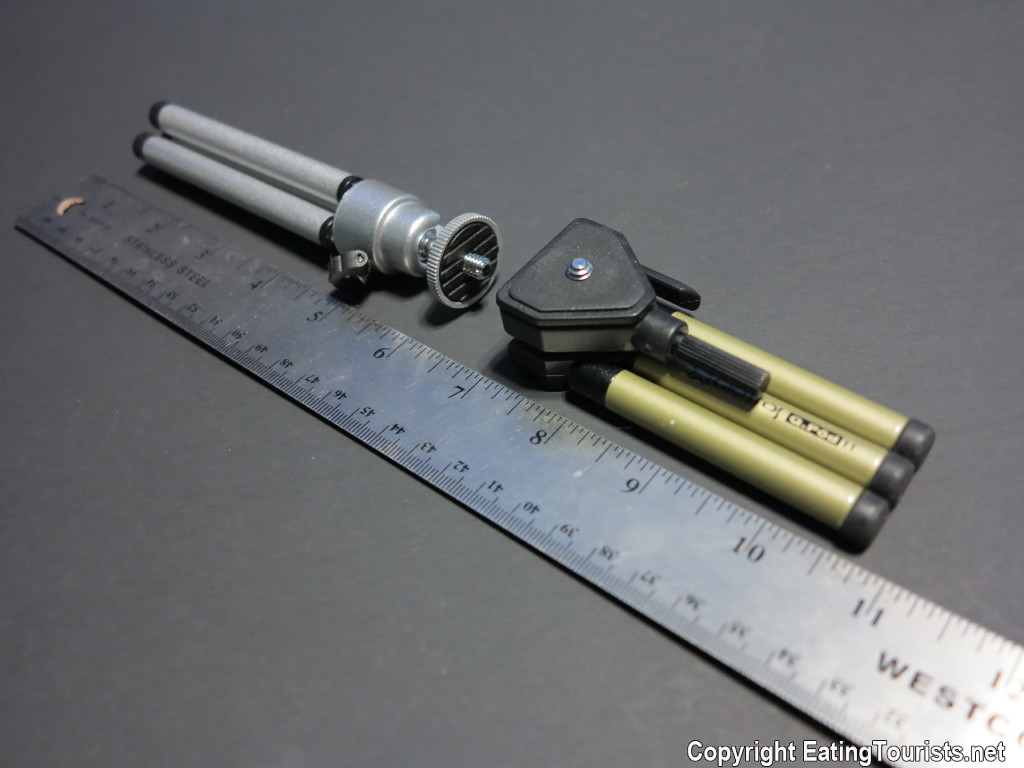
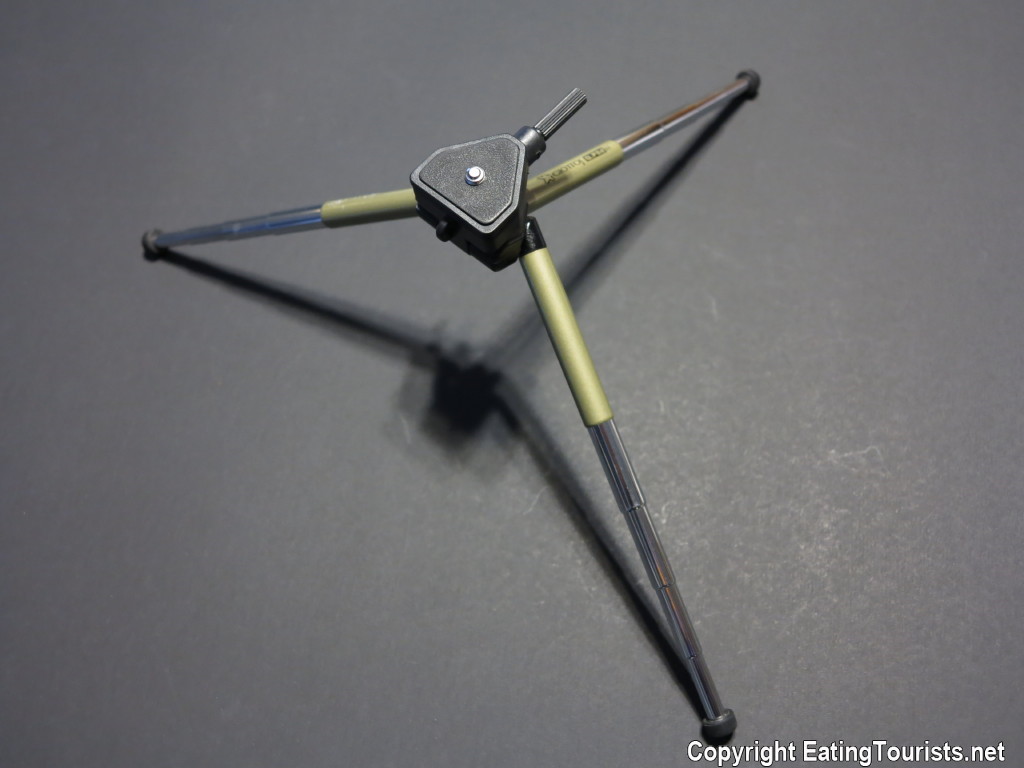
But perhaps more importantly, there is a range of tiny travel tripods that can be pressed into service by placing them on the ground, or on top of a nearby object like a trash bin or a fence post, and some that even have bendy, gripper legs, that can be wrapped around a handy pole or traffic sign. Vicky and I carry two of the little ones whenever we travel. (My favorite is the tiny, light, and very sturdy Q-Pod seen below on the right). In a pinch, the camera can simply be propped up on any acceptable surface and rested on something like a folded up jacket to steady and support it. Anything will do, as long as the camera doesn't move while the shutter is open to take a photo.

Tiny Travel Tripods (folded)
Open Q-Pod - Gives BIG performance
OK, the hard part is over. Now all we have to do is fine tune the amount of light that gets into the camera during the exposure. There are several ways to do this. With a long exposure time of this sort, we need to keep the ISO setting low. An ISO of 100 or 200 will do fine in most cases. (All cameras will allow you to control this). It's also wise to set your aperture as small as possible as well. (You might need a manual setting for this one). Both these things help to prevent your photo from being overexposed due to the very slow shutter speeds. An overexposed fireworks photo will rob the picture of its color, and everything might appear white. Most important by far though is setting the length of the time for the shutter to stay open. This depends a great deal on how "vigorous" the display is. A slow display may need 60 seconds, while a very rapid fire one may need only 3 or 4. The 4th Of July photo (below) needed a 60 second exposure because the firing rate of the show was very slow paced, while the faster paced Disneyland display (2nd photo below) took only 4 seconds to capture).

Slow Show! What you see recorded in this photo took 60 seconds to happen
Fast Show! This photo took only 4 seconds to capture.
This is where digital photography really pays off, since you can see the results of each attempt instantly, and then adjust the settings before the next one.

Lastly, we have to be sure not to move the camera at all when we release the shutter. This means (as with any tripod photography) that we can't actually push the shutter release button manually like we usually do. We'll either need to have a wireless shutter release, or simply use the timer that's already built into most cameras. The timer option is the easiest and least expensive, and all you'll need to do is choose the "2 second" option so that the shutter releases 2 seconds AFTER you push the button. This prevents the inevitable jiggle caused by touching the camera from being recorded as fuzziness on the final image.

Now that you're armed with the basics, you can prepare for your next night of fireworks and come home with pictures that do the show justice. Just take a little time to learn the basic controls on your camera, grab your tripod, and have fun!

Fox & Vicky

Sunday, 30 November 2014

For God's Sake! You're On Vacation...Put Down Your Phone!

I'm sorry to admit that a computer has now actually become a necessary travel accessory for me, but it has. For my specific travel computing needs, a notebook type PC is perfect. That's kept me from being tempted to buy a tablet, and since I don't own a smart phone (and never will) I have been blissfully insulated from the horrifying level of distraction I see around me in fellow travelers. My years in Mexico made me the "frog in hot water" with regards to the widespread change in behavior that has come with smart phones. (If you haven't heard the analogy, it's said that if you drop a frog in hot water, it will jump right out to save itself, but if you put a frog in cold water, and then heat it slowly, it doesn't notice the dangerous increase in temperature, and just sits there until it's too late).

In the late 90's, cell phones were pretty much just phones, and I never got involved in their slow transformation into what are really just tiny tablet computers. In fact I worked in the cellular phone industry back then, and it was while I was at a seminar to roll out the new "data services" that I first saw the social apocalypse coming. A rabid presenter was urging the sales-troops to sell-Sell-SELL the expensive new data airtime packages on the reasoning that without them, the users wouldn't be able to keep up with work on their lunch hours, during their time at home, and while on vacation. I was wondering if I was the only person in the room that had recognized what an insane proposition that was, when I looked around me to see a room full of equally rabid cell-phone salesmen that were frothing at the mouth over the opportunity to make a killing while ruining pretty much everyone's lives. (I was living on a island in the Caribbean within a year of that nightmarish day).

Consequently, I was unnerved to see how much things had changed in my absence, with armies of zombie-like smart phone users roaming the streets, their eyes and thumbs firmly glued to the screen in front of them, and apparently oblivious to the real world. I felt like the only person left in Invasion Of The Body Snatchers that hadn't been taken over by the "pods" yet. It's bad enough to see it in my hometown, but on a recent cruise to Hawaii, I saw people (most people I might add) that were never "in the moment" of their travel experience for more than a few minutes at a stretch. Instead, they were single-mindedly focused on figuring out how to keep their electronic slave-drivers connected so they could obsessively check their Facebook accounts, or whatever it is they do with those things.
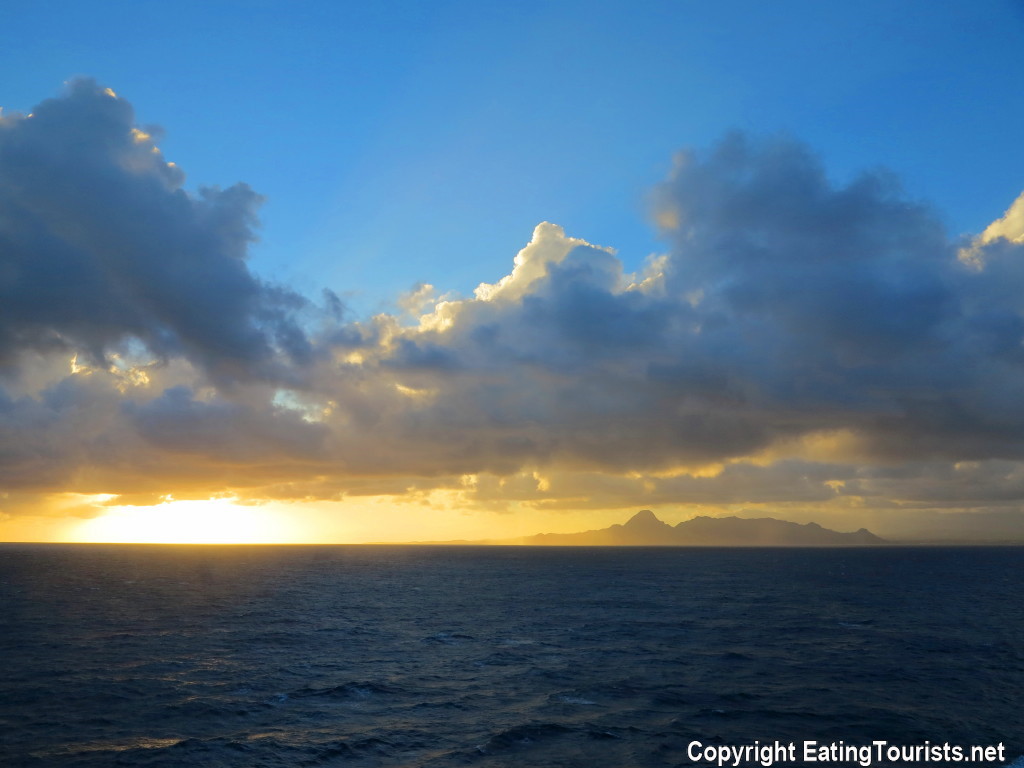
Your travel memories should look like this... 
Bear in mind, we're in Hawaii here, and it was no doubt the first visit for most of them, yet I'll wager that the thing they saw MOST of during their entire fifteen day cruise, was the screen of their smart phone. At the dinner table, during shows, during excursions, on the beach, in the lounges, at the movie theater...NEVER free. There's a pretty fine line between that sort of obsessive phone checking, and laying in your cabin in a heroin induced stupor. Both are addictive behaviors, and both rob the user of the real pleasures of the real world, uninterrupted by constant pointless distraction. (Indeed, there seems to be a real chemical dependency here related to dopamine production in the brain. See this link about the condition called "Nomophobia"). And if you're reading this and thinking that I'm the one with a screw loose, just try to leave your phone in the drawer for a whole day and see what happens. It's wireless heroin, and I weep for this generation.
Or like this...
Now I admit, there I was on the same cruise ship with my travel computer -- but -- I did what I needed to do in about a single 30 minute stretch late every night, and that was that! The rest of the time I was actually fully engaged with my surroundings, and in the moment.
But NOT like this!
I realize that trying to tell people to give up their smart phone mania is like trying to tell people to give up their cars and go back to the horse and buggy for a better way of life. It's not going to happen. But at least make the effort to moderate your behavior, and dial it back while you're dropping five grand to go on a cruise to a beautiful group of tropical islands in the Pacific. Set yourself a specific half an hour of time each day and then ruin it completely with your phone, the same way I do with my travel computer. Then the other 23 1/2 hours a day you'll be free from the evil little device, and you might actually remember a few sights that didn't include a smart phone screen.

Aloha!


Fox & Vicky

Wednesday, 26 November 2014

A Caribbean Christmas Tale

Vicky and I took a Caribbean cruise back in 2010, and the weather was just awful the whole time. Fall is always a pretty dodgy time to cruise, and there were several tropical storms and even a hurricane or two in the area. Since we cruise often, we recognize that the stated itinerary is at best just a suggestion, so when port stops were changed or skipped entirely, and excursions were cancelled outright, we just rolled with it. Usually the port facilities themselves have shopping and other diversions, so we often found ourselves sitting on the dock at some little bar, watching the rain pour down in buckets like it can only in the Caribbean.

Under A Thatched Roof In The Pouring Rain
Many of these little islands have a local beer, and they're often served in bottles that are smaller, or even much smaller, than the ones we're accustomed to in North America. Because the labels and brand names were unusual, and because these port-side bar tours in the pouring rain were becoming something of a theme for the cruise, I made a point of taking a picture of the little bottles we were drinking from at each stop.


It was only later that I realized what I'd done. I had actually captured photos of those most elusive bringers of Santa's Christmas cheer...you've all heard of them...The Eight Tiny Rain Beer!

Merry Christmas to all, and to all a good night!

Fox and Vicky

Saturday, 15 November 2014

Jewels

Okay, I admit it. I'm too busy either preparing to travel, travelling, or recovering from travel, to actually write about travel. That is irony...right? In fact, the date on the post prior to this one has been taunting me so aggressively regarding my failings, that I feel compelled to get something up here just to make it stop. (I would just hate to end up being one of those writers that "think" about writing a great deal, but never actually writes). Now that my confession is out of the way, I will regale you all with another post regarding our time "Down South" which indeed had sufficient effect on our lives to warrant another visit...

Enjoy!


I’m walking along one of the roads that run parallel to the waterfront, but it’s not one of the roads a tourist would be likely to see. There are no jewelry stores and no T-shirt shops. No one is asking me to come inside because they “have the best junk,” or “speak broken English perfectly.” No enormous white ships can be seen sitting offshore like office buildings lying on their sides. None of the things twenty thousand cruise passengers a day might remember about this island are on this street, but it does have a few attractions of its own. I pass a bougainvillea, pouring over a mission style wall like a waterfall, exploding with red flowers. The color is so intense in the setting sunlight that it doesn’t even seem real. On my left now is a bright orange house I never tire of seeing. The locals are fearless about their use of color in decorating, with vibrant yellows, blues, and reds everywhere. My neighborhood back home was brown and gray. The sidewalk under my feet is mostly cracked concrete, but in the center of every rectangular section is a small, bright-blue square of tile, set like a jewel. Jewels of a different kind for those of us that pass this way. 

Orchid Growing Wild In Our Back Garden - Cozumel, Mexico
Yin and yang, good and bad: each needs the other. I enjoy the frequent blasts of beauty I see while walking here all the more, because ugliness is not that rare either. Cozumel is never neutral, and never dull. One minute I might pass a house or restaurant and exclaim, “Oh my god! What is that smell?” as the intoxicating aroma of a delicious meal being prepared escapes into the air. The next, while passing a vacant lot, might produce the same exclamation -- but for a different reason entirely -- as I smell something dead and decaying amongst the garbage and empty beer bottles. It’s a feast for the senses here, but good or bad, everything is set to maximum. When I returned home for a visit last summer, I was struck by how ordinary everything seemed. There were identical houses with identical lawns, no highs and lows, no wild oscillation in the range of sights and smells. Beauty isn’t as valuable without anything to compare it to.

Mayan Ruins - San Gervasio Site - Cozumel, Mexico
I walk past a "municipal jungle," my name for the empty lots dotting the town. Green rectangles of unrestrained nature, they are usually bordered on four sides by man's handiwork. In these places nature makes a stand, and fights back with a ferocity that can only be seen in the tropics. I smile at the notion that the whole island looked like this once, and would look like it again if it were not held at bay every single day. Sky-blue flowers, the size and shape of a petunia are everywhere, giving the jungle the look of an out of control garden. A young egret stands near one border of this wild spot like a garden ornament: slim, graceful, and white. But it’s real, and a reminder that nature is patiently waiting to take over if it gets the chance. I often hear we need to save the planet, but I think the planet will do just fine by itself if one day we aren’t around to interfere; it’s we that need to be saved from ourselves. 

Iguana - So common that they're the "gophers" of Cozumel, Mexico
I heard a parable once about an old man standing near the gates of an ancient walled city. A family approached carrying all their belongings in a wagon. The father spoke to the old man, telling him they were looking for a new place to live, and asking him what he thought of this city. The old man asked, “What was the place you came from like?” The father answered, “It was a terrible place, dirty, ugly, and full of liars and thieves. No one was kind and everyone looked out only for himself.” The old man replied, “You won’t like it here then, because this city is just like that.” With this, the family moved on. Soon another family approached and asked the same question of the old man, as they too were looking for a new place to live. Again, the old man asked, “What was the place you came from like?” They answered, “It was a wonderful place, clean and beautiful, full of loving and kind people that were always ready to lend a helping hand.” The old man said, “Then you will like it here, because this city is just like that.” Well Cozumel is just like that too, and like any other place, it is exactly what you make of it.

Performers In The Annual Carnival Parade - Cozumel, Mexico
The sun has plunged toward the sea now, seeming to set faster here somehow. The sky to the west is on fire with yellow and orange and red. The clouds look like something from an oil painting, illuminated from within as if they are the source of this light and color. I’m on my way to a local nightspot. It’s not some noisy bar full of twenty-somethings, swilling beer and flashing their tattoos and body piercing. It’s a quiet oasis of cosmopolitan flair called Ambar, another example of the surprising range of this place. I walk through the lounge; past eclectic art and machine turned tabletops, thinking this place would be at home in the most hip of districts in any metropolis. I head through the back door into a garden seating area, where jazz plays softly from speakers hidden in the plants. I love the way the architecture in Mexico blurs the distinction between indoors and out. Vicky is waiting for me at one of the tables, with two ice-cold bottles of dark beer at the ready. The moon is full, or nearly so, and those areas not lit by the garden lights are bathed in bright blue moonlight. I shake my head, thinking that back home the snow is two feet deep and it’s thirty degrees below zero. We clink our bottles together, making a toast, and drink deeply; it’s hot out tonight. 

The Harbor At Christmas - Cozumel, Mexico
Travelers to places like this probably go home thinking they have a notion of what it’s really like here. They tell their friends and family they have been to Cozumel. Sadly though, they have likely seen only a sanitized and carefully prepared set, designed to empty as much cash from their wallets as possible. Avenida Rafael Melgar, the main shopping street along the waterfront, is all of Cozumel most people will ever see. They are warned not to wander onto the dangerous back streets, and to be wary of the local eating establishments. Patent nonsense, as this is the safest place I have ever been, and I’d rather trust local restaurants (that feed their friends and families day after day) than tourist joints that serve you once and never see you again. Make the effort to break free of convention and see the real Cozumel, because you won’t find it on Melgar. Sure, you might see some garbage on the streets, or smell something bad, but you might see some unexpected beauty too.

Sunset From The Ventanas Al Mar (Windows To The Sea) Eco-Hotel - East Coast - Cozumel, Mexico
Vicky and I are walking home now. The streets are quiet but for the occasional taxi driving by. They still flash their headlights in case we want a ride. I guess we’ll always look like tourists no matter how long we live here. Overhead, the moon is bright and clear, and seems impossibly large. Closer to home, we are passing by another municipal jungle when something catches my eye. We stop to look more closely, and within the densely packed leaves and vines is a natural marvel. Hundreds of tiny flickering yellow lights are moving this way and that throughout the plants. They are fireflies, and they look like Christmas tree lights that have been freed, as if by magic, to float away from their wires and do as they please. I stand and stare in wonder. It’s dark, and though I’m sure this jungle is just as full of trash as all the rest, it’s the fireflies I will remember. Each one of us lives in a world of our own making, given form by the power of our thoughts and perceptions. We can see the beer bottles and garbage, or we can see the flowers, birds, and fireflies: the jewels of a different kind. Each one of us is in charge of how we feel. 

I feel lucky.


Fox & Vicky

Wednesday, 8 October 2014

Under The Big Top

Did I mention that we're scuba divers? If you dive, then you've either already been to the reefs of Cozumel, Mexico, or you're planning on going one day...and with good reason. Vicky and I lived there for quite a while, and it was the diving that drew us. Here's a piece I wrote then that touches on my feelings regarding what must be one of the world's very finest examples of Nature's work...

This is my favorite time. I'm sitting on the side of a friend and dive-master's boat, above the reef called Punta Dalila. My tank is hanging over the edge, supported by the straps on the back of my equipment. I know it’s only gravity pulling it toward the water but it feels like much more. A while ago, we had a dive where nothing seemed to go smoothly. Afterwards, while waiting to be picked up, the dive-master apologized and said, "The reef just didn't want us here today". This day is different. The reef does want us here this time, and my tank just knows it. It tugs at my shoulders impatiently, the way an eager boy might tug at his father’s pant leg, as if to say, “Come on, let’s go! We’re gonna miss it!" The author Dave Barry once wrote, "Staying on the surface all the time is like going to the circus and staring at the outside of the tent.” Well, the circus is about to start. I watch the captain, waiting for his signal; usually a brisk nod and a hurried "go!" Soon it's my turn; everyone is clear, and I get the nod. I give in to the tank’s eager tugging and feel myself roll backwards. This is the moment. This tiny free-fall that marks the beginning of another hour spent in a world most people will never see. My tank hits the water first, and pulls me under quickly in a swirling explosion of bubbles that is the curtain going up. During training, an instructor said I would see things so beautiful while diving that I would want to cry. His words come to mind once again as the bubbles clear, and I see it's not just any circus today; it's a Ringling Brothers and Barnum & Bailey three-ring extravaganza. I'm in the middle of a hundred or more Creole Wrasse, looking like cobalt blue torpedoes flying in every direction. "Laydeeeez and Gentlemen, high above the center ring, it's the Flying Creole Brothers…" I hustle to rig the lights on my video camera and clear the bubbles from the lens. I don't want to miss any of this. 

French Grunts On The Reef - Cozumel, Mexico
I live here and this is my Cozumel. Before I moved here I managed a couple of telecommunications stores where we tried to convince people that a cellular phone, or pager, or some other electronic gadget would make their lives better. Every day I did that emptied me out a little bit more, and took me a little farther from the real sources of happiness life has to offer. Now I dive, write, shoot photographs and video, and spend my time trying, as Gordon Downie puts it, "… to do one true, beautiful thing." I don't have a car -- they're not needed here -- a bicycle will do, or a taxi in a pinch. I have no phone line -- though I do have a cell phone -- but it's a servant now, not a master. No Internet connection, and consequently no life-sucking surfing to eat up the hours. An occasional trip to the Internet cafe to check for e-mails from friends and family is more than enough. No television either -- at least no television signal -- though I do have a TV and DVD player to watch rented movies now and again. All of these things are available here, but something about Cozumel made me recognize they don't really matter. I thought I might waste away without them, but exactly the opposite occurred; I woke up.

Yellow-Line Arrow Crab In Vase Sponge - Cozumel, Mexico
Descending below the Wrasse, I see the second act is starting their performance. Dozens of Sergeant Majors, the official models for reef photographers everywhere, are decorating the reef with their black and yellow stripes like self-propelled Christmas tree ornaments. Now it’s countless Blue Tangs, swirling together with a surprisingly large group of Ocean Triggerfish (normally seen alone or in pairs). A crop of Garden Eels disappears into the sand like retractable blades of grass as we approach. Like the first time, like every time, I'm awestruck. I think of this as "The Riot of Life," where the interaction of different life forms is played out like a Technicolor ballet right before your eyes. The reef makes it so obvious each creature depends on another for its survival. I shoot as much tape as I can, but the current is really flying today, so we don't have long to enjoy these opening performances. We go deeper into the warm, blue waters of the Caribbean, our world compressed now, focused, and extending only to the limits of visibility.

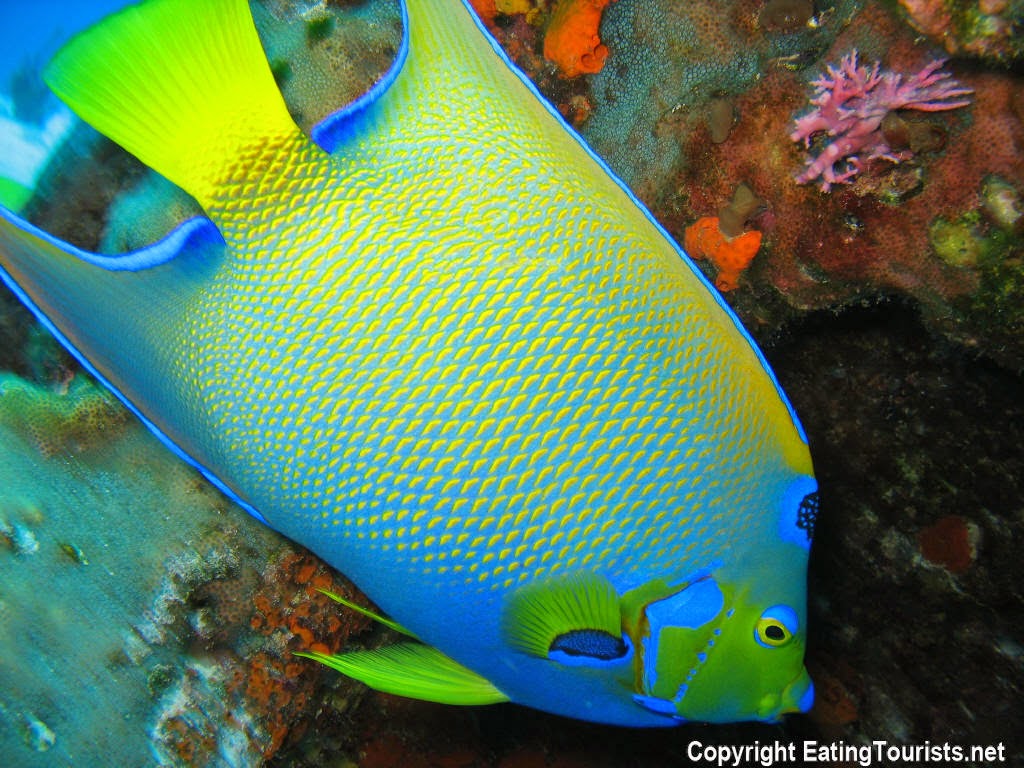
Queen Angel Fish - Cozumel, Mexico
The hands of the clock don't move any slower here, they just don't matter. If you're married to the idea of firm schedules and on-time performance, you'd better stick to Cozumel as a tourist destination. Living here requires a more relaxed attitude than I was accustomed to back home. At first, I had trouble accepting the offhand manner in which people would fail to keep appointments - and promises. Later however, I saw it for what it was, a part of a simpler and less rigid view of our place in the world. There was an electrical problem in the house we are renting that took almost two weeks to get fixed. Once upon a time, that would have really bothered me. Now it's an accepted part of a more relaxed rhythm of life, swimming with the current, and not against it.

Anemone - Cozumel, Mexico
It's a good day for flying. Our group is blowing through the water, propelled by the high current, with the reef slipping by a few feet beneath us. This always looks so cool in person, but I know from experience that it looks terrible on videotape. I decide to just relax and enjoy it, so I let the camera dangle on its lanyard, and stick my arms out like the wings of an airplane. (I know it doesn't really do anything, but somehow it feels more like flying this way). My dive partner notices an enormous Nurse Shark lying under an outcropping of reef. Usually, they have their heads in a hole with only their tails sticking out, and consequently don't photograph very well. This one is lying curved in a "C" shape with its head looking out from the reef. For this shot, I guess I'll just have to swim against the current a little bit. Kicking like crazy to hold position, I move closer and closer to the shark, finally bringing the camera within eighteen inches of its snout. I concentrate on composing the shot and holding the camera steady, but I can't help wondering if today is the day that things will go horribly wrong. However, the shark is accommodating, and remains still as we let the current pull us away to continue our flight.


Squirrel Fish - Cozumel, Mexico
I always thought a big income meant certain happiness. Everything around me seemed to indicate that money was the key to enjoying life. The time I spent in the telecommunications industry was like winning a small lottery. They were dumping money on me with a front-end loader, yet I was miserable. It didn't make any sense to me. So I spent most of that money diving in expensive places, trying to find the happiness I was supposed to have. It was in Fiji, while staying at a thousand dollar a day resort that I first realized money and happiness have nothing to do with each other. We visited a traditional village of two hundred people on a neighboring island. Their lives had not changed significantly in hundreds of years (except they now had motors on their boats). By the standards set in North America, these people had nothing, yet they were indeed the happiest people I had ever seen. Later, back in our room, I couldn't help but wonder if being happy for three weeks out of every year was really good enough. This was the beginning of a new path for me, or at least a fork in the road. I don't have much money now, but…

Brittle Star On Coral (During Night Dive) - Cozumel, Mexico
I've still got a thousand PSI of air in my tank. This is the second dive though, and the computer says I've had the recommended daily dose of nitrogen. It used to be I ran out of air long before nitrogen was a problem, but not any more. Slowly, I rise to safety-stop depth and begin the five minute wait to ascend. The reef is too far away to videotape now, so I shut down the camera and drift with the current. It’s not as exhilarating, but this "high-altitude flight” over the reef is equally beautiful. This is a quiet time with few challenges, a time to reflect. It's been a good day, and maybe I got some nice tape. I hope the shark footage comes out well. Now, very slowly to the surface, turning, watching for boats, my hand, arm, and finally head, break into the sunlight. I'm back outside the circus tent, smiling at my friend the dive-master a few feet away. I thank him for presiding over yet another beautiful experience. He says, "You're welcome, but it was the reef; it wanted us here today."

...I'm happy.

Fox & Vicky